
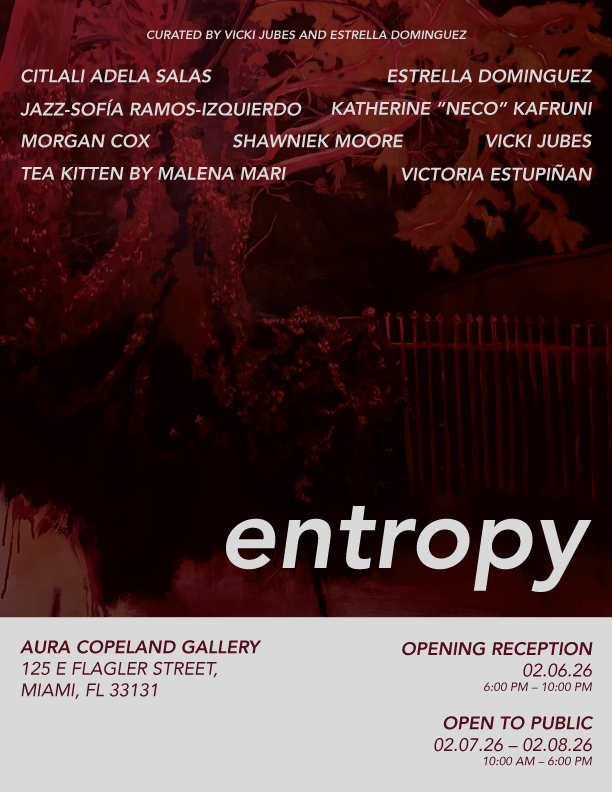
entropy
This exhibition presents work by Female Miami-based artists whose practice, although different in language, are connected through the environments that surround us.
The artist in this exhibition work in between reflection and filtration. As Miami based, their oversaturated surroundings becomes filtered noise, integrated into their own perspectives of what we perceive to be reality. These perspectives weave together by community creating a shared space for order, as well as disorder to be free not just from ourselves but the worlds we reside in.
Entropy operates as a condition rather than a metaphor. Energy moves through bodies, materials, and systems, and is dispersed through the act of making. Within the tension between structure and looseness, the work reflects an ongoing ability to reshape how we inhabit our surroundings.
artists
vicki jubes
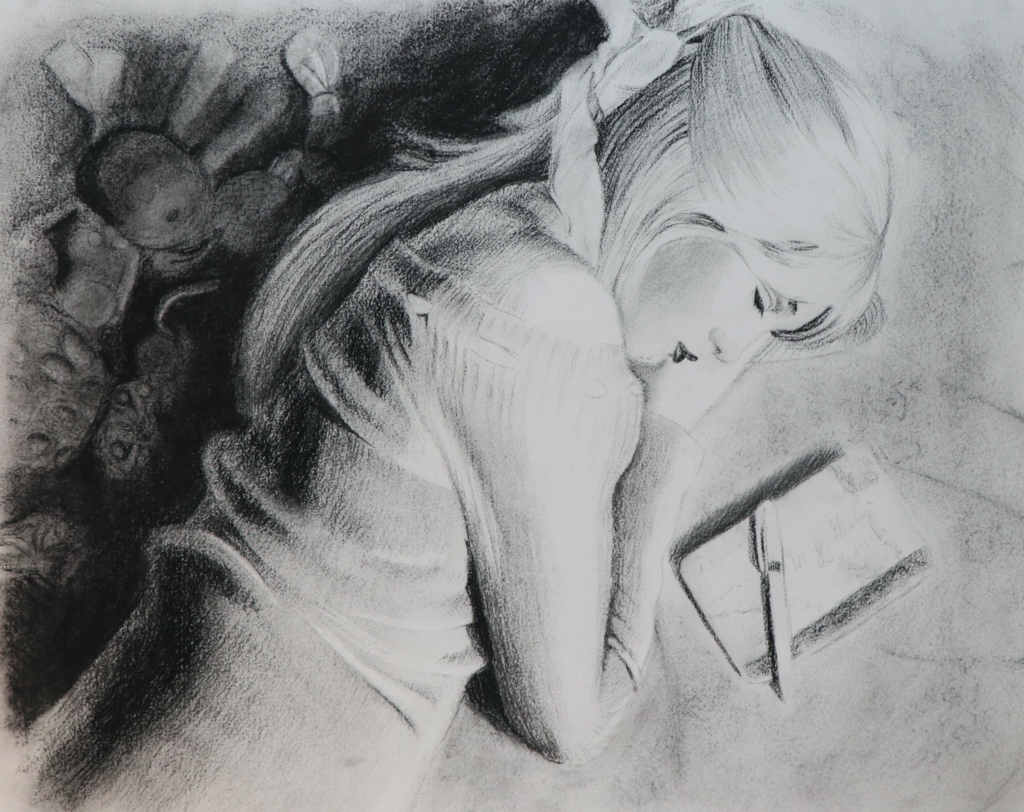
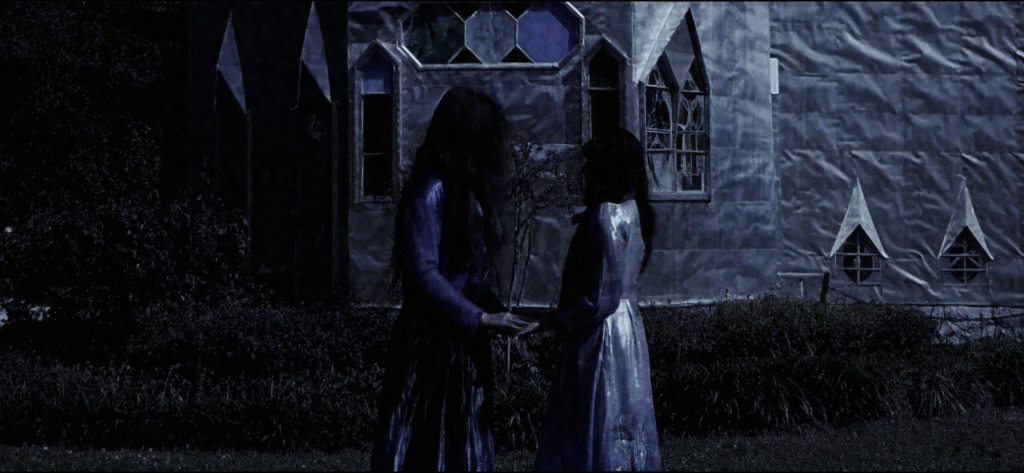
Vicki Jubes is a Venezuelan artist based in Miami, focusing primarily on drawing and photography. Reflecting on girlhood, Vicki shares genuine moments of joy and sorrow, capturing the bond of true understanding and wonder.
This series transforms personal experiences into a dreamlike world half-remembered, half-imagined. Through the Koa Girls, she invites others to connect with her magical narrative, capturing the experience of girlhood’s shared secrets. She uses charcoal for large-scale drawings and watercolor for the illustrations inside the book that tells the girls’ story. Reflecting on her girlhood, Vicki uses forgotten things and fragile figures to express a need to escape reality, grieving lost dreams while creating new ones in the quiet spaces between memory and desire.
estrella dominguez
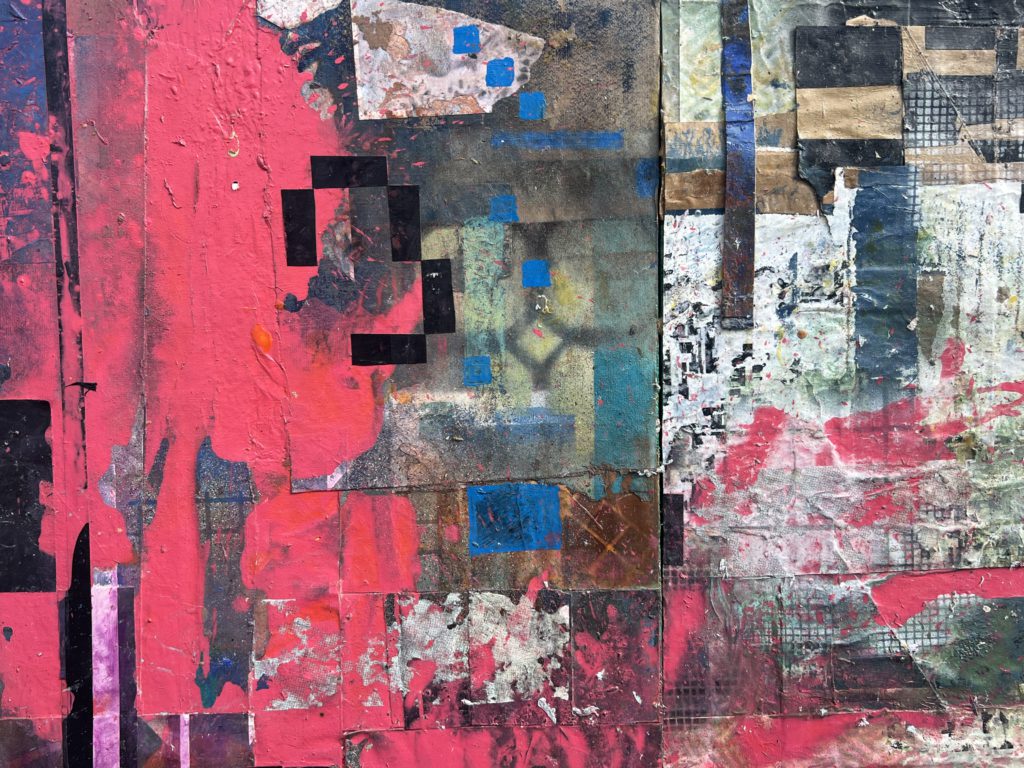
Estrella Dominguez is a Miami based artist whose practice develops through response. That response may come from process, material behavior, or ongoing research. Painting and object making function as open systems, reshaped through removal, adjustment, and replacement rather than predetermined structure. This exploration acts as a record of movement, time, and interaction.
Dominguez works with paint, found materials, fabrics, and repurposed objects. These materials are allowed to respond to one another throughout the process, informing each decision. Her work often reflects on fragments of environments that feel abandoned, altered, or in transition. Surfaces are built, covered, broken apart, and reassembled, leaving traces that register both control and loss. Energy moves through materials and is dispersed rather than contained.
Her practice reflects an interest in how systems behave when left open. Bodies, spaces, and structures are treated as shifting sites rather than fixed forms.
katherine “neco” kafruni
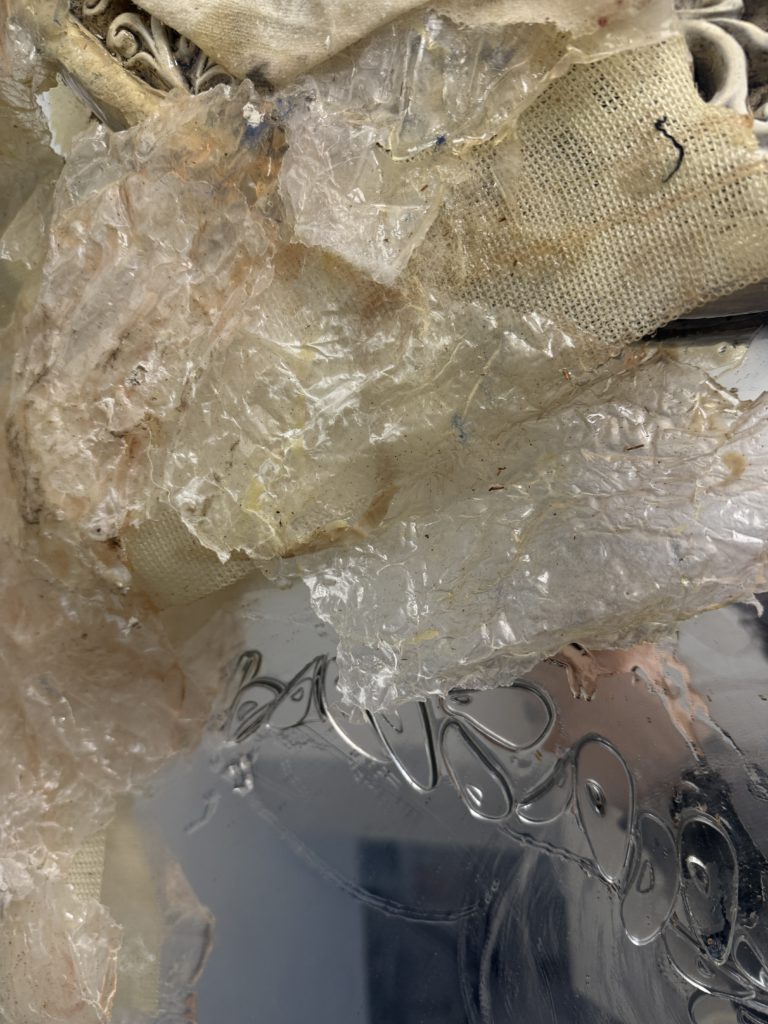
Katherine “Neco” Kafruni is a Miami-based Lebanese-Venezuelan multidisciplinary artist exploring identity, self-acceptance, and queer experiences through sculptural paintings, street photography, video art, and printmaking. Their work, often figurative and community-driven, reflects personal narratives while fostering connection and visibility within the queer community. Neco’s work has been recognized with awards including the Fred Snitzer Honors Program, a micro-grant from The Green Space, and the Artist as Catalyst Production Internship, and they have exhibited at venues such as Locust Projects, Deering Estate, Green Space Miami, and O’Cinema Theater. They also curated the 2024 show “Lost in Reverie: Tales from the Playground” at the New World School of the Arts Gallery. In addition to their studio practice, Neco is committed to arts education, having taught at Paul L. Dunbar K-8 Center and worked with organizations such as Silent Victims of Crimes, The Bass Museum STEAM+ program, Minds of Tomorrow, as well as their residency with ProjectArt, to provide arts and programming for children. Their work strives to foster dialogue, empathy, and empowerment, creating spaces where individuals can see themselves reflected and affirmed.
citlali adela salas
b. 2004, currently lives and works in Miami.
Research-creation hybrid practice converging dichotomies between sensuality, sociopolitical forces, and perspectives of reality. She has extended her practice into performance via film, shifting aspect ratios and self-referential cinematic strategies, across distinct visual registers.
jazz-sofía ramos-izquierdo
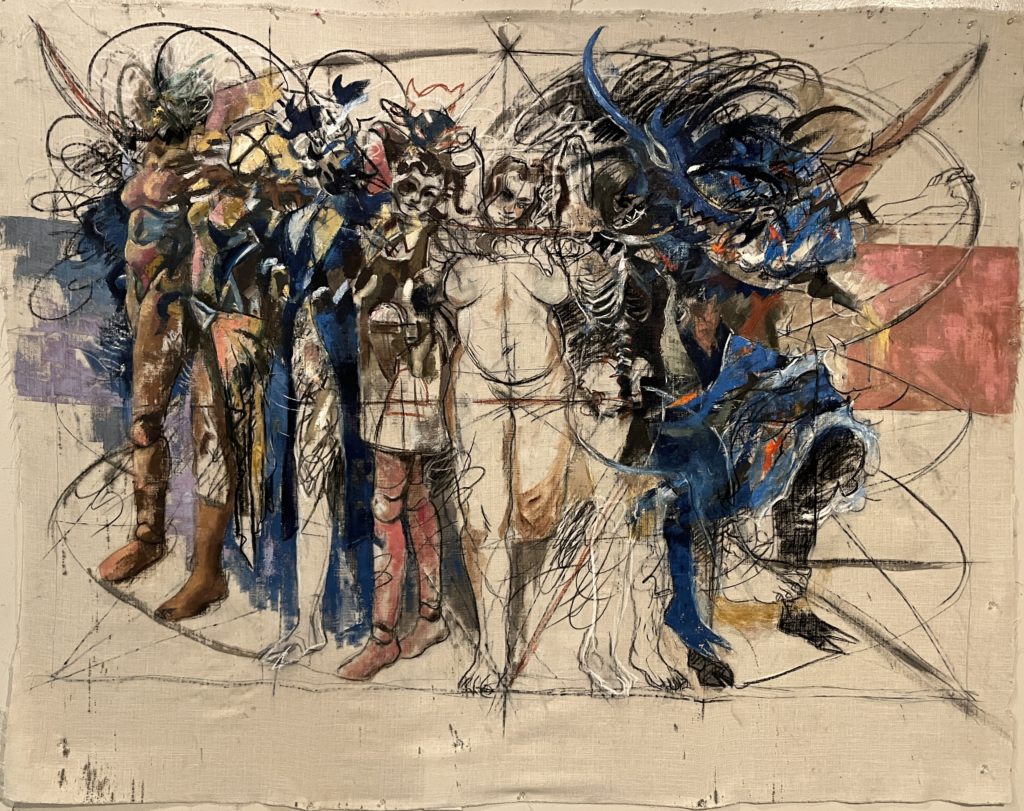
Jazz sees the body as a shifting site, something that carries culture, memory, desire, and danger. Her work begins in that tension, the flicker between form and refusal, where identity is shaped and reshaped in the gaze of others. She paints figures that are in-between, caught in a process she calls “acrolithic becoming.” Part flesh, part porcelain, part apparition, they hold a monumentality that is always slipping out of frame.
Her materials are layered and deliberate, oil paint that reveals and obscures, graphite and charcoal that protects and exposes. She uses doll-like fragments, delicate gestures, and spectral color to explore how trans bodies, especially transfeminine bodies, are made both visible and vulnerable. These are not portraits. They are presences, charged with longing, discomfort, and ambiguity.
She builds these works slowly, layering gesture, rhythm, and space. Each figure is both structure and story, a fragmented archive, a performance of softness, a refusal to be defined. She draws from my own history and from cultural references, visual art, literature, and the imagined possibilities of the body in transition.
Her practice is about asking, how do we make room for fluidity? How do we hold intimacy without turning it into spectacle? She moves through the world as a viewer and participant, attuned to the fragile, the sensual, and the unspoken. Even when overlooked, these presences shape how we see, how we feel, and how we might begin again.
morgan cox
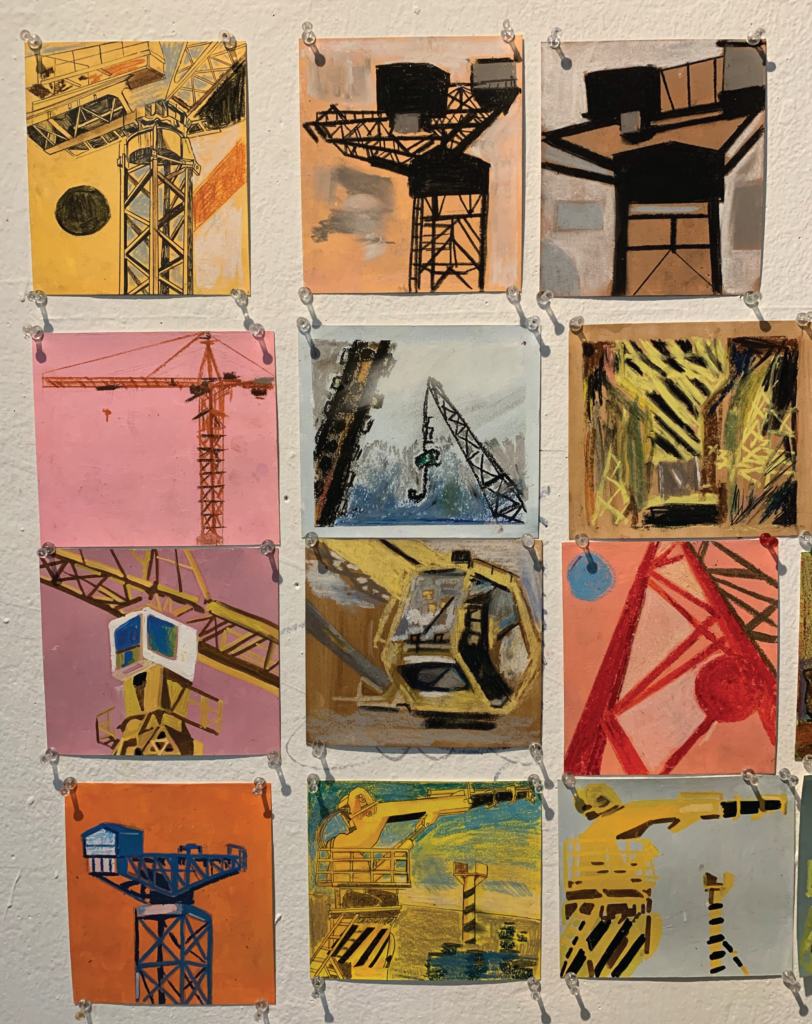
Her practice investigates how physical frameworks shape communities and individuals, and the relationship between structure and transformation. She is absorbed in micro- and macro-level processes within nature, industrialization, and decay, understood as cycles of atrophy and regeneration.
Through many stages of evolution, mutation, and extinction, these cyclical relationships are built up and broken down. They appear in records of time that may be treasured or abandoned, but regardless, they persist in remembrance. This rhythmic process reveals itself through detached, objective representations of tools and machinery involved in large-scale fabrication. The work later evolves into constructions built from the surface, using texture to form a first-person relationship to lived-in surroundings.
victoria estupiñan
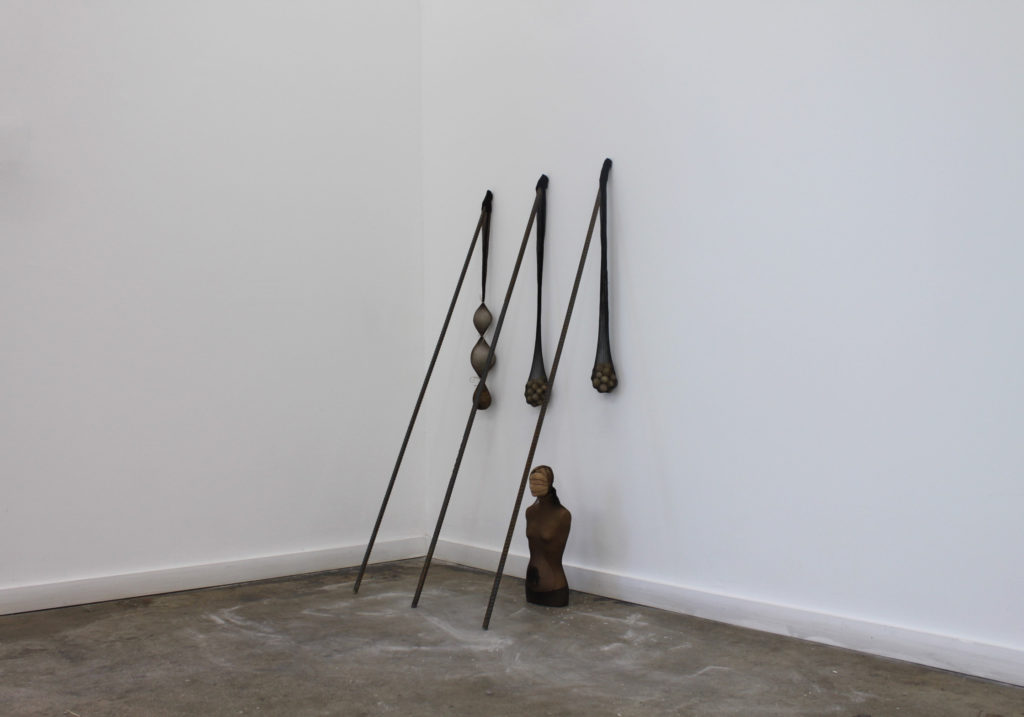
Her practice explores memory, myth, femininity, religion, assimilation, and the lasting effects of imperialism in the Americas. Working across sculpture, photography, and collage, her work investigates the entanglement of memory, myth, and history as they unfold between South America and North America. She is interested in how imperialism and immigration shape lived experience, embedding these forces into materials that carry both political and poetic weight. By transforming everyday objects into sculptural metaphors, she examines how history is inscribed in material, body, and land
shawniek moore
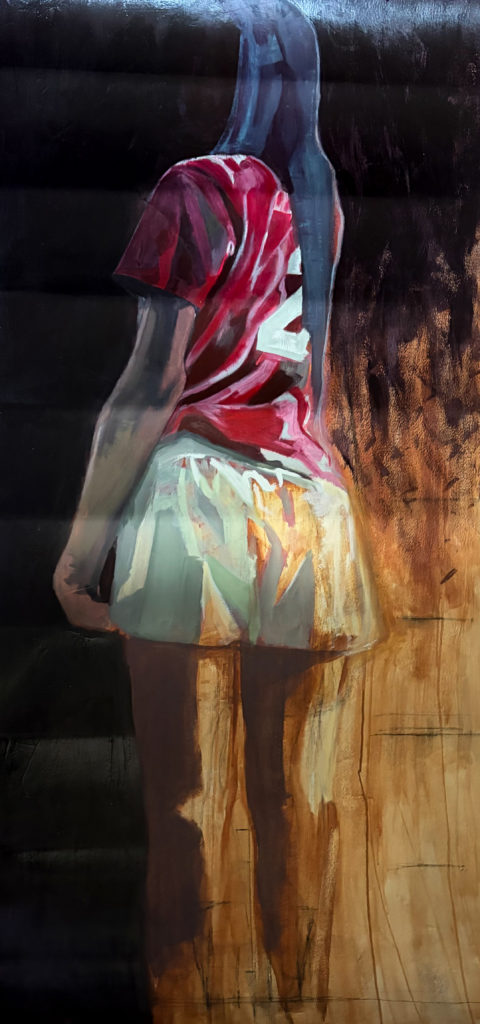
Her work explores different aspects of the same story, reflecting her reality and perception. She creates narratives that engage themes of isolation, insecurity, and memory, using art as a tool for self-understanding and discovery. She paints to capture the essence of emotional experience. Her paintings reveal layers of process, mirroring the haziness of memory. Some areas are fully rendered, while others are left unfinished. The play between light and dark is a pivotal element of her work. Light appears soft, delicate, and warm, evoking comfort, while darkness feels cold, neglectful, and encompassing. Though often perceived as negative, it can also carry a sense of comfort. The color palette she chose is often dark, even when minimalistic, creating the feeling of being swaddled by the painting.
malena mari
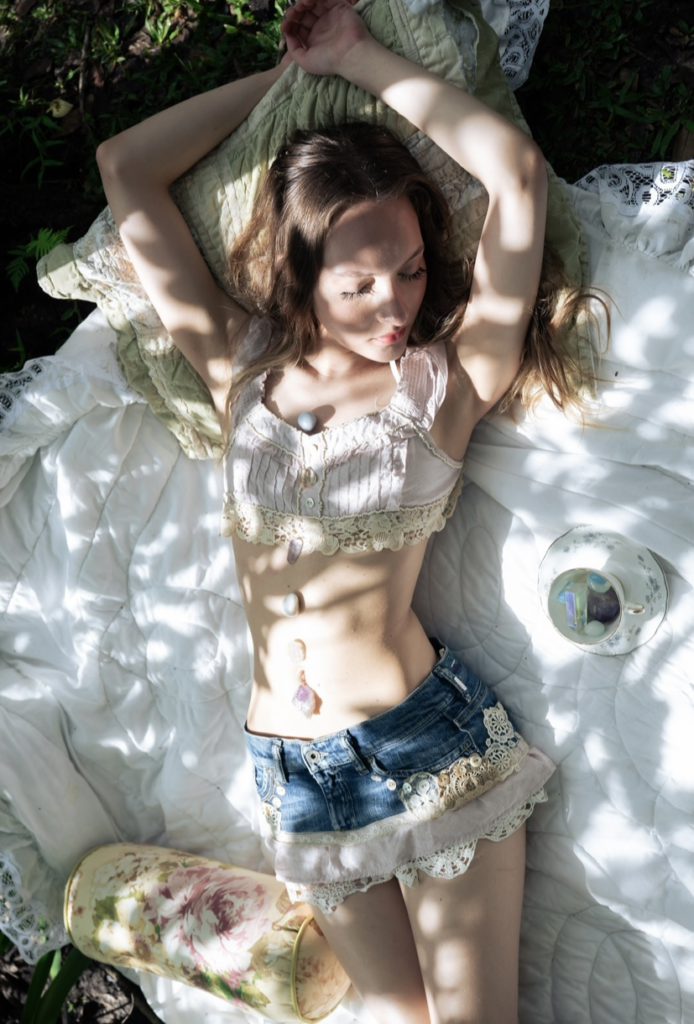
Malena Mari is an Argentinian fashion designer based in Broward. She grew up in both the United States and Argentina, where she realized the different pressures of society but also how every human contains at least one similar feeling: love. Her passion for art has pushed her to make choices most would deem risky but these decisions led her to being able to express who she always was. While creating these pieces, she thought back to times where some have a difficult time accepting how they truly feel. Times where you want to feel anger and sadness but your heart aches with love. This feeling she is drowning in is poured into each stitch sewn. Even in instances where she has found she has made an error, she reminds herself that our mistakes identify one from another. Using what she can to create clothing from what little she has like cute spoons, buttons, beads, lace, and doilies. Mari spots the beauty in even the tiniest gadgets that may appear useless to many but make up Tea Kitten. She has always seen the potential in everyone and everything. Since she was little she would voice her thoughts and ideas with a pencil and paper, creating things that would soon come to life. Her whimsical optimism in the way she views the world is undeniably inspiring.